Reviewing Amendments
Once the Amendment Phase is open on a draft resolution, delegates' proposed amendments show up in a queue, each with its text and current sponsor count.
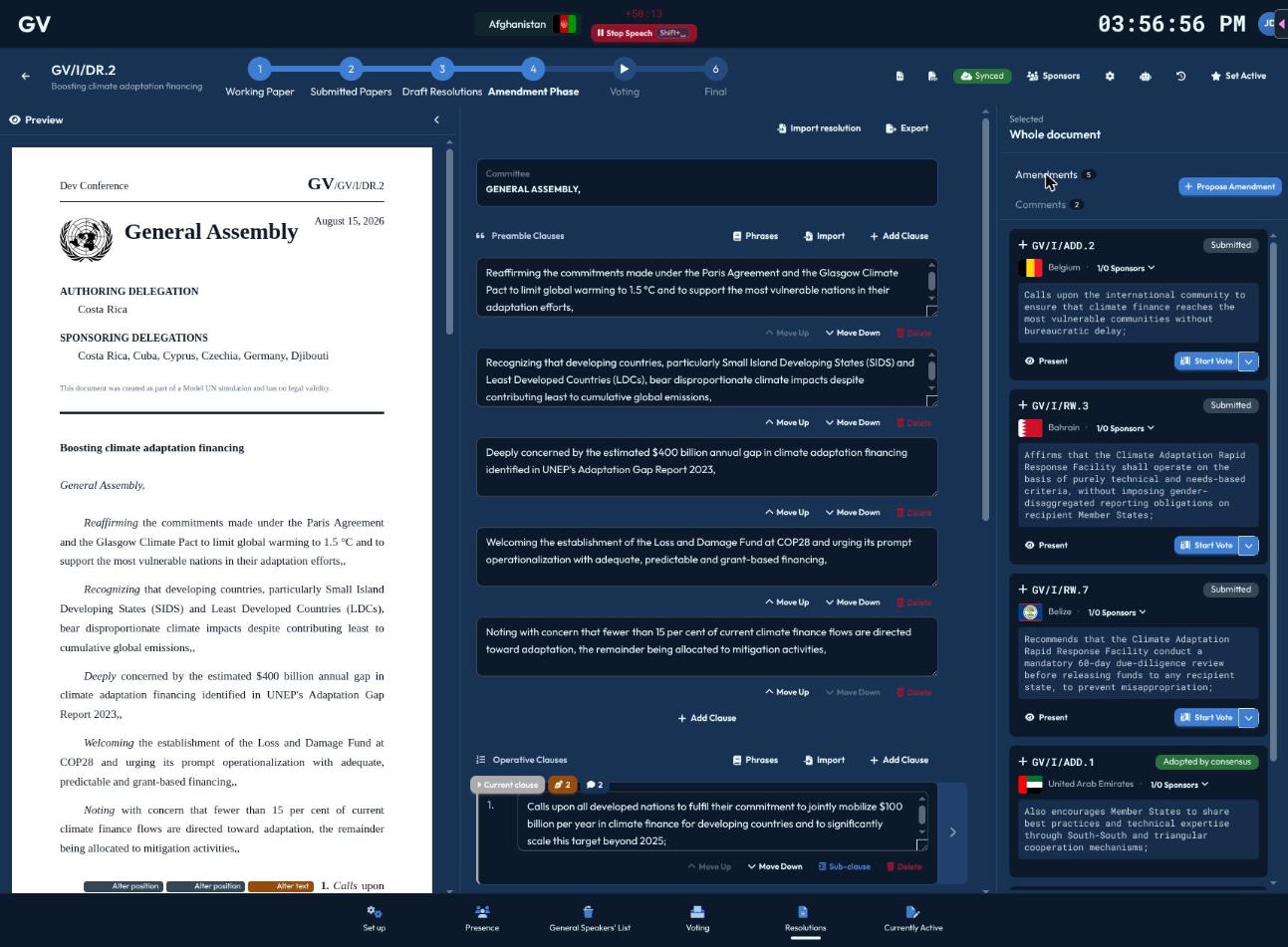
Deciding an amendment
For each amendment, expand its menu to choose:
- Accept — applies the change to the document immediately.
- Adopt by Consensus — accepts it without a formal recorded vote, for when the room clearly agrees without objection.
- Reject.
- Withdraw — on behalf of the proposer, or they can withdraw it themselves; this can't be undone.
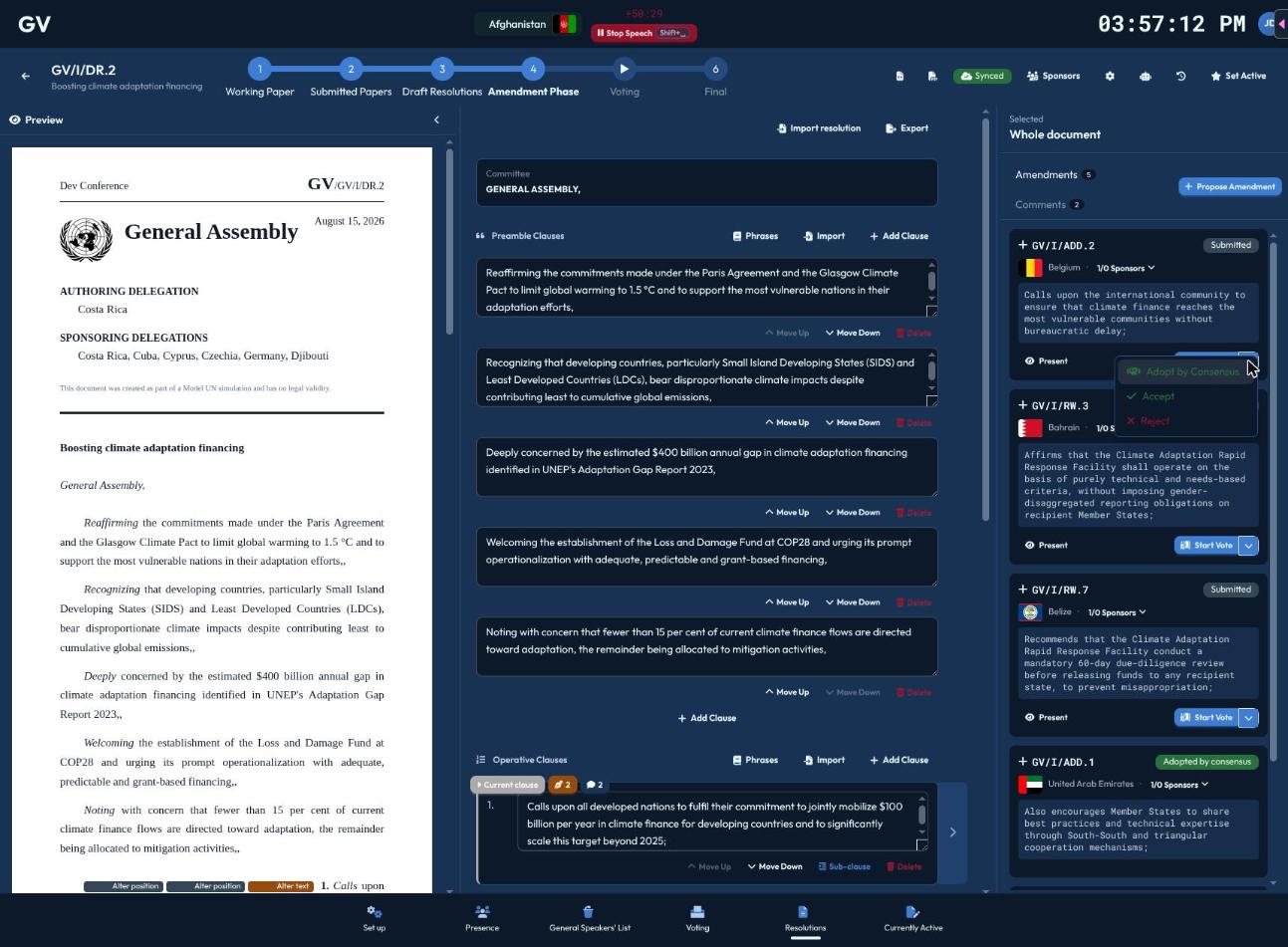
Putting an amendment to a vote
Click Present on an amendment to push it to the presentation screen, then start a quick show-of-hands, simple-majority vote directly from its row. Once the vote concludes, you'll get an outcome prompt pre-filled based on the result (which you can still override) before confirming — the amendment automatically comes off the presentation screen afterward.
Reconciling amendments after a change
Accepting one amendment can affect others targeting the same or nearby clauses. If that happens, CHASE opens a two-step review:
- Obsolescence — flags whether other pending amendments are now outdated given the change you just made.
- Text adjustments — suggests rewrites to reconcile any amendments that still make sense with the newly changed text.
This review only runs if AI assistance is turned on for the chair currently using it — it's a personal preference each chair sets for themselves, not a conference-wide setting (see AI Assistance).